

Learning to be More Human
Why organisations need to skill up in StoryTelling for the age of AI

Over time, I feel like I’ve had the knack of arriving in places at interesting times.
And this is certainly an interesting time to run a business that’s deeply invested in learning and development.
This is a moment where AI has marched into the room, and posed just about the most existential questions you can ask of management teams, and L&D teams:
What does learning mean when all knowledge is right there in your hand?
Why do you need people, when you have me?
What is it to be human? What is uniquely valuable about human work?
Most of us probably weren’t expecting those questions to become so immediate!
And when such a big technological force marches into the room so loudly, it can trick you into thinking the only appropriate response is technical.
New tools, new workflows, new platforms, new accreditations.
Of course those things are useful. Organisations need people who can handle new tools confidently and responsibly.
But the real shift is not primarily technological - it’s human.

Why humans skills matter
Machines can automate more and more tasks, and that’s very useful. But the differentiators that really drive growth are the uniquely human skills:
the ability to set vision, and engage customers and teams with change
the ability to build trust across boundaries, and collaborate without politics
the ability to sell effectively, strategically, and empathetically
This is the core work of organisational growth now, and this is why this is such an interesting time to work in the field of organisational learning.
Too much learning activity still treats learning as a training input - rather than as a human experience that involves inspiration, practice, and dialogue.
But this is the learning and development we need now.
According to the World Economic Forum’s Future of Jobs Report 2025, analytical thinking remains the most sought-after core skill for employers globally, cited by nearly seven out of ten organisations as essential for success in 2025. Alongside that, businesses reference resilience, flexibility and agility, leadership and social influence, and creative thinking…all deeply human skills.
These are not “soft skills”; they are crucial, gritty survival and growth skills.
And over a couple of years deeply immerse in the world of organisational Learning, there are three things we’ve definitively learnt:
Story is an infinite skill. Wherever you find an organisational growth challenge, story is the key unlocking force. And the more you learn it, the easier it all becomes.
Anyone can be a StoryTeller. It’s not sustainable to rely on a couple of extrovert experts. And it’s not desirable, because you are missing the full picture.
Story brings people together. There are a lot of things pulling people apart - generations, working patterns, specialisms. Story is a binding force in culture.
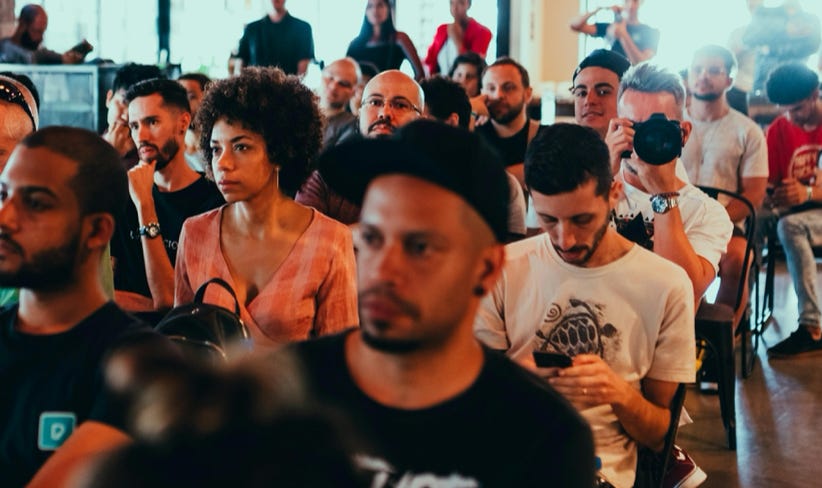
1. Story is an infinite skill
Some of us have got used to thinking about storytelling as something to do with marketing content. Indeed to the point where in those fields are wary of using terms like ‘story’ because they feel fluffy (they are trying to learn the language of Finance.)
When we talk about storytelling, we are talking about something more fundamental - the ability to apply the truth to specific contexts, in a way that connects with people, and leads to a meaningful growth outcome.
The need for this skill to grow shows up in all sorts of areas - here are three of the most commonly occurring:
Narrative in Numbers
More and more of the time, we are telling stories on behalf of data and technology.
This is a language that divides audiences, and renders some of the most humane and skilful storytellers robotic and ill-at-ease.
And that is why the best data and technology communicators are increasingly narrative experts; putting data and tech in an audience context that compels action.
Planning for Partnerships
A lot of commercial plans are founded on the power of partnerships - client relationships that consolidate and grow over time, commercial partnerships and joint ventures that are more than the sum of the parts.
Partnerships rarely fail because of lack of competence, or responsiveness. They fail because of a lack of shared reality, ambition and momentum.
Story - through vision, shared experiences, and committed behaviours - creates the kind of alignment that leads to relationships growing over time.
Pitch StoryTelling
It’s an uncomfortable feeling, but we live in a world where we are all selling, pretty much all the time - whether we are representing a big business, a non-profit, or ourselves.
The reason this makes lots of people uncomfortable, is because they associate selling with manipulation. But good selling (that works) is about diagnosis, clarity, and momentum.
There’s another word for this - story. People choose stories that simplify things for them, and that’s where the sale is.

2. Anyone can be a StoryTeller
When you do the same thing, again and again, you develop pattern recognition.
And having now trained thousands of people in storytelling, there’s one very obvious rule - which is that if someone tells you that they are terrible at storytelling, then you can be pretty certain that shortly afterwards, they will turn out to be one of the most compelling speakers or storytellers in the room.
(The inverse isn’t 100% true. But it is truer than you’d think - because people with a lot of very good storytelling experience develop bad habits.)
Why is this true?
I think partly, this is because confidently declaring that you aren’t strong at something is a declaration of openness and self-awareness - which are amazing superpowers when it comes to StoryTelling.
But another is that it often marks out people who know they have another capability - data analysis, Finance, service design - and that this means their personal style is often quite different from the traditional ‘show pony’.
As an organisation, what you want is the ability to put as many different capabilities and as many different styles in the shop window as possible. It enables you to present the fullest story externally of who you are and what you can do; and enables you to reach into every part of your organisation with your story.
So the question is almost never whether someone is “a storyteller”, but whether they have had the opportunity to sharpen the skill in a way that suits their style.
And that requires design: learning that is attached to their real work, with real tasks, real inspiration, and real support.

.
3. Story brings people together
For all the anxiety there is about learning and development, there’s probably even more organisational angst at the moment about culture.
Some of it is about hybrid work, some about time pressure, some about specialist fragmentation, some about generational shifts.
One common response is to try to “fix culture” with social events. And that can help, people do need fun, and belonging. We love them too!
But culture is really built by shared meaning: shared language, shared standards, and shared stories about what matters and how we behave.
Learning together is one of the most powerful culture interventions we have.
When teams learn together and apply that learning to real work, three things happen:
People learn to name problems in the same way, and solve them better.
People’s skills base grows, because they learn to apply things together.
Accountability increases, because people support each other’s progress.
What this means
If you are in an organisation, and thinking about learning and development, or culture, hopefully some of this resonates.
I believe every organisation that wants to thrive in the years ahead will need an storytelling plan as a team.
This isn’t just an internal communications plan - it’s a commitment to sharpen the story you are trying to tell, externally and internally, and then building the commitment to help your people access experiences that help them to tell and live it.
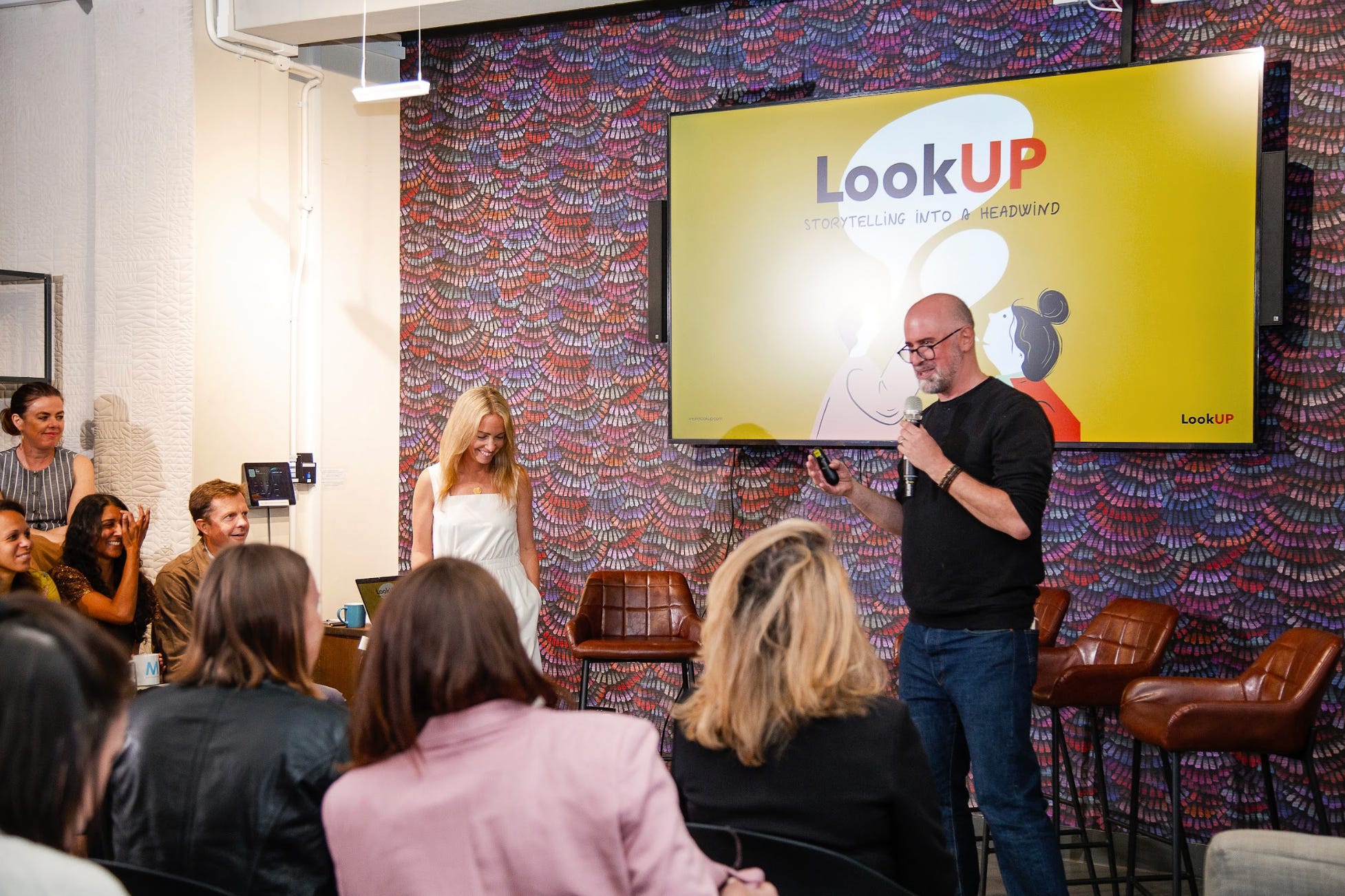
If you’d like to talk about what an organisational storytelling plan could look like for you, get in touch with LookUP via contact@wearelookup.com. We’ve learnt a lot, and we are always learning more.
And if you’ve seen brilliant examples of human-centred learning in your own organisation, we’d love to hear about them in the comments.